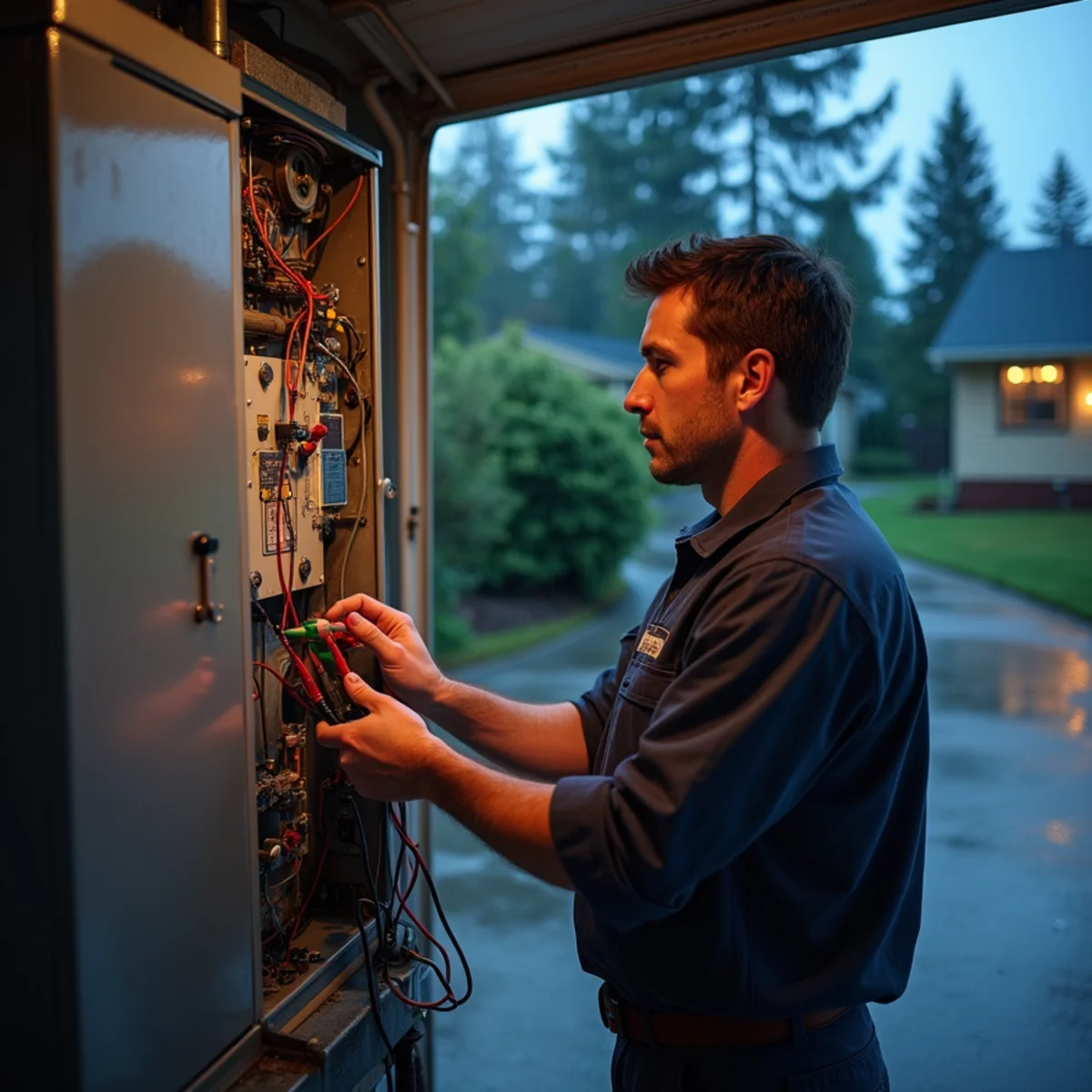
Need furnace repair in Lynnwood, WA? Call (321) 478-0693 at any hour: an L&I-registered, insured contractor diagnoses the no-heat problem, tells you the price before any work starts, and fixes gas and electric furnaces of every common make. Most no-heat calls here come down to an igniter, flame sensor, inducer motor, control board or a clogged filter.
The typical Lynnwood house was built around 1979, and plenty of them are now on their second or third furnace. That furnace works from October well into May, cycling through months of cool, damp weather, and when it quits it tends to pick a cold, wet night. We handle furnace repair in Lynnwood, WA for gas furnaces on Puget Sound Energy service and electric furnaces on Snohomish County PUD power, from split-levels in Alderwood Manor to ramblers in Martha Lake and condos along Highway 99.
Call (321) 478-0693 at any hour and a live person answers. We dispatch the nearest available independent contractor and give you a realistic arrival window, since weather, traffic and call volume all play a part. The technician finds the actual fault and gives you the price before work starts. Every HVAC contractor we send is registered with Washington L&I, licensed where Washington requires it, and insured.
Furnace problems we fix in Lynnwood homes
The thermostat calls and nothing happens, the burners light and drop out, or the blower runs cool. Behind those symptoms, the heating repair calls we take most often in Lynnwood involve:
- Hot-surface igniters that have cracked or worn thin
- Dirty flame sensors that shut the burners off seconds after lighting
- Noisy inducer motors, and pressure switches that will not prove draft
- Control boards with failed relays, fault codes or water damage
- High-limit switches tripping because a clogged filter starves the furnace of air
- Blower motors and run capacitors, plus sequencers and heat strips on electric units
We cover all of Lynnwood, including North Lynnwood, Meadowdale and the streets off 196th St SW and 44th Ave W, plus the cities around it. See our pages on furnace repair in Edmonds, heating service in Mountlake Terrace and furnace and heat pump repair in Bothell, or every one of our HVAC service areas around Lynnwood.
No heat, short cycling, cold air: what each symptom usually means
No heat at all. Check that the thermostat is on Heat, the furnace service switch and breaker are on, and the front panel is seated, since a door safety switch cuts power when it is loose. Past that, the fault usually sits in the ignition sequence or the control board. Our list of furnace checks to make before you call for repair covers the safe ones in order.
Short cycling. Burners that light and drop out within seconds usually mean a dirty flame sensor. A furnace that runs a few minutes and then quits is more often overheating and tripping its high-limit switch because of a clogged filter, a dirty AC coil on top of the furnace or a restricted return.
Blowing cold air. If the blower runs but the burners never light, the board has probably locked out after several failed ignition tries. On a 90 percent furnace, a plugged condensate trap can hold the pressure switch open and cause the same thing. First, confirm the thermostat fan is on Auto, not On.
Noises. A screech points to worn motor bearings. A boom at startup is delayed ignition and needs attention soon.
Furnace noises and smells: what they are telling you
Search for furnace repair and half the questions are about a sound or a smell. Some are harmless, some need a technician this week, and one means leave the house. Here is how to tell them apart in a Lynnwood home:
| What you notice | What it usually means | What to do |
|---|---|---|
| A boom or bang when the burners light | Delayed ignition from dirty burners, a weak igniter or a gas pressure problem | Book a repair soon; repeated booms can crack a heat exchanger over time |
| Squealing or screeching from the blower | A worn blower motor bearing, a failing belt on older units, or a dry inducer motor | Call before the motor seizes and the heat stops altogether |
| Clicking, but the burners never light | The igniter or ignition control is trying and failing, often after a lockout | Note the blink code on the status light and call |
| Rattling or buzzing from the cabinet | A loose panel, an inducer wheel out of balance or a failing contactor | Usually not urgent, but it gets worse, not better |
| A dusty burning smell on the first cold day | Dust burning off the heat exchanger after the summer | Normal if it fades within an hour; call if it does not |
| Hot electrical or melting-plastic smell | Overheating wiring, a motor or a control board | Switch the furnace off at the breaker and call |
| Rotten-egg (sulfur) smell | Possible natural gas leak | Leave the house now; call 911 and Puget Sound Energy at 1-888-225-5773 from outside |
Gas furnace repair: igniters, flame sensors, inducer motors and control boards
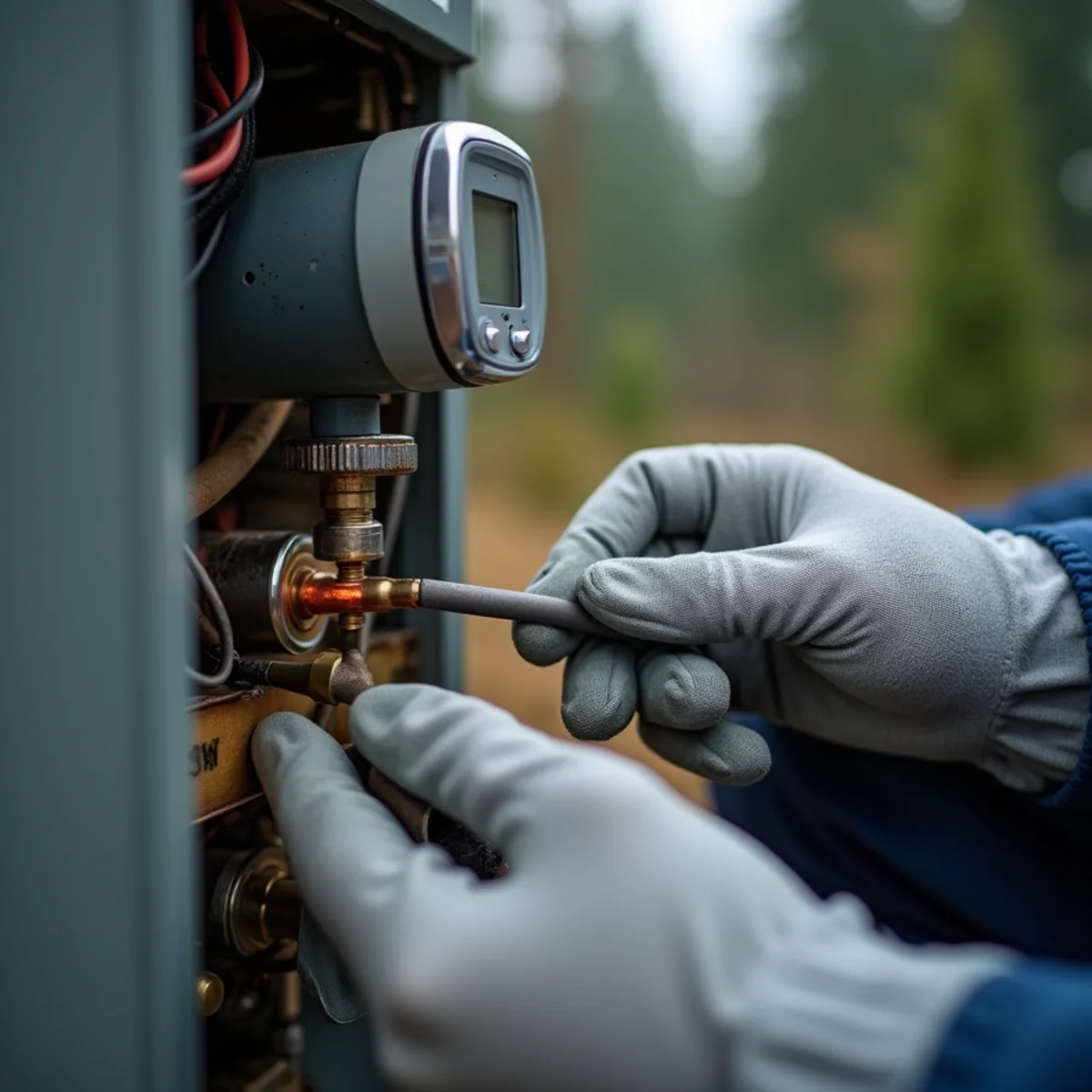
A gas furnace runs a fixed sequence. The inducer motor purges the heat exchanger, a pressure switch proves draft, the hot-surface igniter glows, the gas valve opens, and the flame sensor confirms the burners lit before the blower starts. When a step fails, most control boards flash a fault code that shows where it stopped.
Igniters crack with age, especially the silicon carbide type in many older Lynnwood furnaces. Flame sensors build up a film that blocks the tiny current they read, which is why so many no-heat calls end with a cleaned or replaced sensor. Inducer bearings wear and start to whine. Pressure switches do fail, but the real culprit is often a cracked hose, a blocked vent or water sitting in the trap.
Limit and rollout switches are safety devices, so a proper repair includes finding out why one tripped. Older PSC blower motors rely on a run capacitor that weakens with age, while newer ECM variable-speed motors are tested differently and cost more. Control boards are the priciest common part, so the board should be confirmed bad, and the cause found, before it is replaced: a dripping condensate line or a surge when power returns after a windstorm can kill the next board too.
Electric furnace and air handler repair
Not every Lynnwood home burns gas. A good share of condos and townhomes around City Center and along Highway 99 heat with an electric furnace or an air handler with heat strips. With no burners or venting, their failures are electrical: elements that burn open, sequencers that stop staging elements on, open limit switches or fusible links, burned contactors and breakers that keep tripping.
The usual complaint is slow heat and a climbing Snohomish PUD bill, which often means only some elements are working. A technician measures current at each one and checks the sequencers. At 240 volts and high amperage, scorched connections are a fire risk worth catching early. If your air handler also serves a heat pump, see our heat pump repair page.
Why furnaces fail here: 1970s and 1980s homes, long damp heating seasons, clogged filters
Lynnwood's median home dates to 1979, built in the growth that followed I-5's opening in 1965. The original furnaces are long gone, and many replacements installed in the late 1990s and 2000s are now old enough for igniters, inducers, blower motors and boards to fail one after another.
The marine climate adds wear of its own. A heating season from October to May means many short, mild cycles: more ignition starts, more heating and cooling of the heat exchanger, more blower hours. Furnaces in garages and crawl spaces sit in damp air that rusts burners and flue pipe. Add a clogged filter, loaded faster by late-summer wildfire smoke, and the limit switch starts tripping. Check the filter monthly all season.
Repair or replace: age, heat exchanger condition and efficiency
Most gas furnaces last roughly 15 to 20 years. A 20-year-old unit with a bad igniter and a sound heat exchanger is often worth fixing; an old unit needing an expensive part, or one with repairs piling up each winter, usually is not.
A cracked heat exchanger usually ends the discussion, because it can let carbon monoxide into the air the blower circulates. A technician confirms it with a camera or a combustion test and should show you the evidence. If a CO alarm sounds or people feel headachy, dizzy or nauseous indoors, do not troubleshoot: leave the house first, then call 911 and Puget Sound Energy's gas emergency line at 1-888-225-5773 from outside, and call us after that.
Efficiency counts too. A furnace from the 1980s or early 1990s may run well below the 90-plus percent AFUE of current condensing models. Our HVAC installation and replacement page covers sizing, heat pump options, incentives and permits; a mechanical permit is typically required, and the installing contractor usually pulls it, so confirm who does.
Furnace tune-ups before the heating season
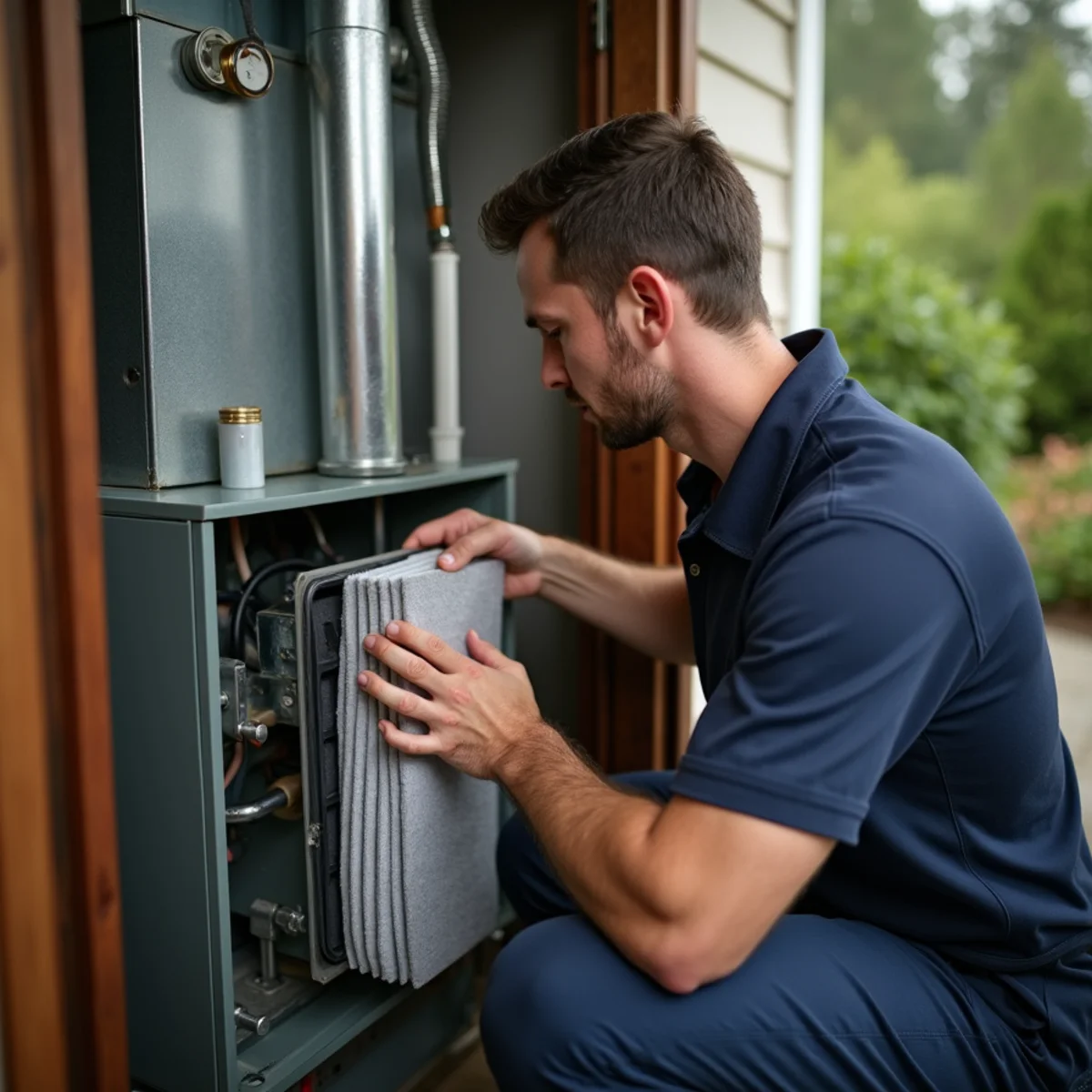
Book a furnace tune-up in September, before the first cold, wet week of October puts every furnace in the county to work at once. A thorough furnace service visit covers:
- Igniter testing and flame sensor cleaning
- Inducer motor, blower motor and capacitor checks
- Gas pressure, burner flame and venting
- Heat exchanger inspection and safety switch tests
- Condensate trap, filter and temperature rise
Between visits, check the filter monthly during the heating season, keep storage away from the furnace, and keep a working carbon monoxide alarm on every level of the house.
What's included in a furnace repair visit in Lynnwood
A furnace repair visit should leave you with a working furnace and a clear picture of its condition, not just a swapped part. Every visit from a contractor we send should include:
- A full diagnosis: thermostat signal, power, igniter, flame sensor, inducer and pressure switch, limit switches, blower and control board, tested until the actual fault is confirmed
- Safety checks on gas furnaces: burner flame, venting and draft, gas pressure, a look at the heat exchanger and a carbon monoxide reading
- The repair price before any work starts, with after-hours rates explained up front
- The repair itself, using parts carried on the truck where possible, or a clear timeline when a part has to be ordered
- A test cycle after the repair: full ignition sequence, temperature rise across the furnace and a check that the filter and condensate drain are clear
- A plain-language note on anything else worth watching, such as a rusting heat exchanger or a tired blower motor
Repairs cover the furnaces you actually find in Lynnwood utility closets and garages: 80% and 90%-plus gas furnaces, electric furnaces and air handlers, single-stage and two-stage units, and the major brands installed across south Snohomish County over the last 30 years. If the furnace has a heat pump on top of it, see heat pump repair for the outdoor side.
What affects the cost of a furnace repair
We do not publish prices, because an honest number depends on what the technician finds. What moves it:
- The failed part: cleaning a flame sensor is a different job from replacing a control board or inducer motor
- Furnace type and age, since high-efficiency and variable-speed parts cost more and some older parts are harder to find
- Access, such as a tight attic or crawl space versus a garage
- Nights, weekends and holidays, with any different rate stated before work starts
Either way, you get the price before any work starts. For more detail, read what furnace repair costs depend on in Lynnwood, or see 24/7 emergency HVAC repair if the heat is out on a freezing night.
The Furnace Repair process, step by step
What happens from the moment you call about a furnace that will not heat:
- 1
Call and describe the symptom
A live person answers 24/7. Tell us gas or electric, any blinking light code and who is home. Gas smell or CO alarm? Leave first and call 911 and PSE.
- 2
Nearest contractor dispatched
We send the closest available L&I-registered, insured contractor with a realistic arrival window.
- 3
Diagnosis and price
The technician reads the fault code, tests ignition, airflow and safety switches, and quotes the price before any work starts.
- 4
Repair and test run
Once you approve, the repair is made and the furnace runs full cycles to confirm it lights, holds flame and shuts down cleanly.
Why choose Alderwood Heat & Cool Pros for Furnace Repair
What you get when you call us for furnace repair in Lynnwood:
Answered around the clock
A person picks up day and night, through the October to May heating season and every cold snap.
Price before work starts
Diagnosis and price first. Nothing is replaced until you approve it.
Registered and insured contractors
Every HVAC contractor we send is registered with Washington L&I, licensed where Washington requires it, and insured.
Gas and electric, old and new
From 1980s gas furnaces in Alderwood Manor to electric air handlers in Highway 99 condos.
Furnace Repair around Lynnwood
We cover all of Lynnwood, including Alderwood Manor, Martha Lake, North Lynnwood, Meadowdale and City Center, plus Brier and the five cities within about 25 minutes. Edmonds and Mountlake Terrace are next door; Bothell, Mill Creek and Mukilteo are the outer ring. See the full list of HVAC service areas around Lynnwood, or go straight to your city:
Frequently asked questions
How fast can a technician get to my home in Lynnwood?
We answer 24/7 and dispatch the nearest available contractor as soon as we have your details. We do not promise a fixed arrival time, because it depends on weather, traffic on I-5 and Highway 99, and how many no-heat calls come in at once, which jumps in the first cold weeks of the season. When you call, we give you a realistic window. If anyone at home is elderly, an infant or medically fragile, tell us.
Why does my furnace start and then shut off after a few minutes?
That is short cycling, and it usually has one of three causes. Burners that drop out within seconds point to a dirty or failing flame sensor. A furnace that runs a few minutes and stops is often overheating and tripping the high-limit switch because of a clogged filter or blocked returns. On high-efficiency furnaces, a plugged condensate drain can do it too. Replace the filter first; if it continues, a technician can read the fault code.
Is it worth repairing a 20-year-old furnace?
Sometimes. If the heat exchanger is sound and the repair is a modest part like an igniter, flame sensor or capacitor, fixing it can buy several more seasons. Replacement makes more sense when a costly part such as the control board, inducer or blower motor fails on top of recent repairs, when the heat exchanger is cracked, or when you want a more efficient furnace or a heat pump. Ask for the repair price and an honest read on the unit.
Are the HVAC contractors you send registered and insured in Washington?
Yes. Every HVAC contractor we send is registered with Washington L&I, licensed where Washington requires it, and insured. Alderwood Heat & Cool Pros connects you with independent, L&I-registered HVAC contractors who perform the work. Washington has no single statewide HVAC license: contractors register with L&I, electrical work needs a specialty certificate, and refrigerant work needs EPA Section 608 certification. You can check any registration with Washington L&I's contractor lookup.
My furnace smells like burning when I first turn it on in the fall. Is that normal?
A dusty, burning smell for the first hour after the furnace sits idle all summer is normal; it is dust burning off the heat exchanger. Open a window and change the filter if it is dirty. A smell that lasts for hours, smells like hot plastic or wiring, or comes with smoke is not normal, so shut the system off and call. If you smell gas, leave the house, then call 911 and Puget Sound Energy at 1-888-225-5773 from outside.
Still have a question, or need help right now?