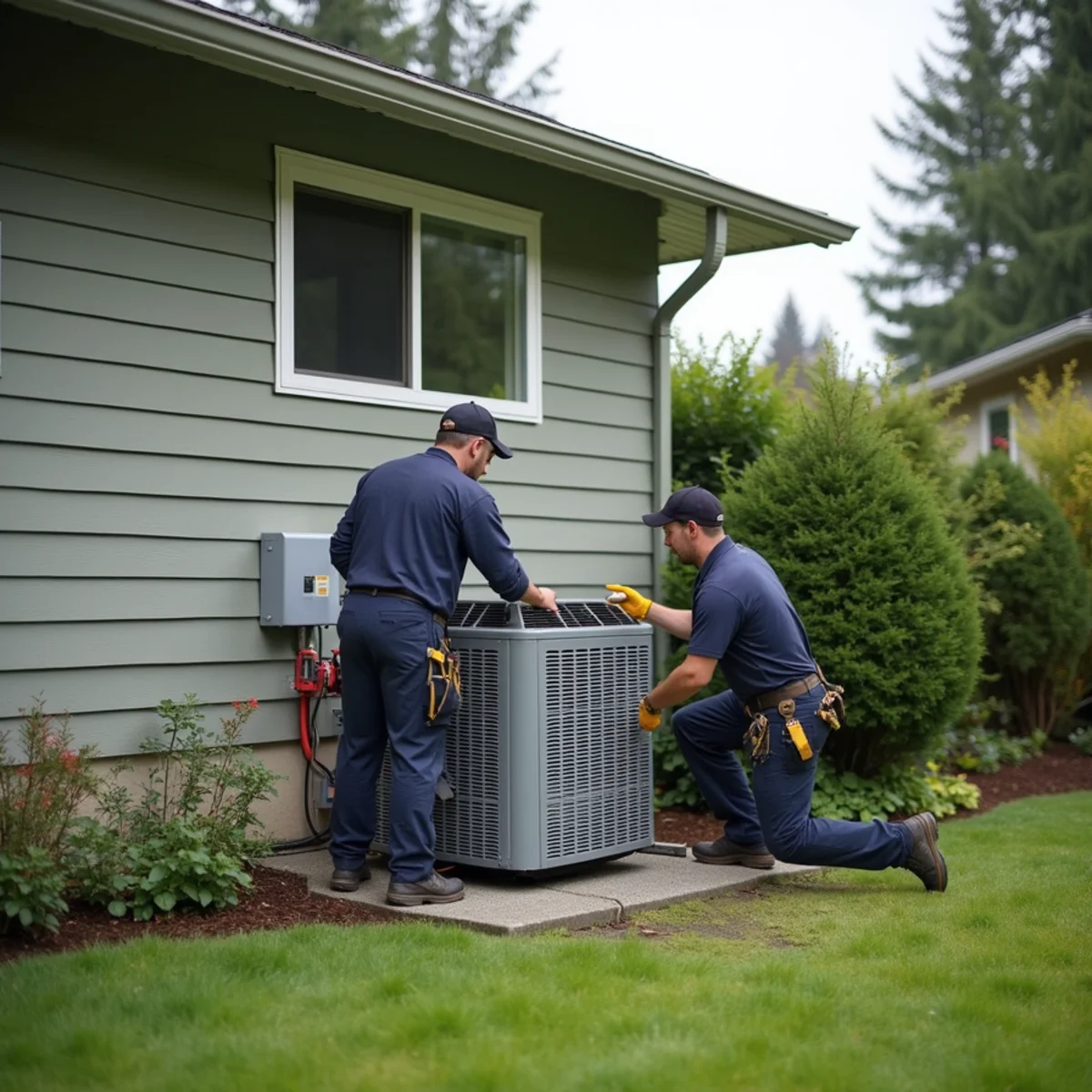
For HVAC installation in Lynnwood, WA, call (321) 478-0693: we connect you with an L&I-registered, insured contractor who sizes the new furnace, air conditioner or heat pump to your house, handles the permit, and gives you a written, line-item price before any work starts. Replacement starts with a load calculation, not a guess based on the old unit's label.
The median Lynnwood home was built in 1979, so many houses here are on their second or third furnace and never had air conditioning from the builder. That is why HVAC installation in Lynnwood is rarely a simple swap. A furnace replacement in a split-level off 196th St SW, central air for a rambler in Alderwood Manor, or a heat pump replacing electric heat in Martha Lake each raises its own questions about sizing, venting, ducts, electrical capacity and permits.
Alderwood Heat & Cool Pros answers around the clock and connects you with an independent, L&I-registered HVAC contractor who installs furnaces, central air, heat pumps and dual-fuel systems, with a written price before any work starts. Call (321) 478-0693 to set up an in-home estimate.
When replacement makes more sense than another repair
Age alone does not condemn a furnace or air conditioner, but it changes the math. Ask for a replacement quote alongside the repair quote when:
- A gas furnace is 20 or more years old and needs an inducer motor, control board or gas valve
- A cracked heat exchanger or flame rollout has been found, which is a carbon monoxide risk
- An aging air conditioner or heat pump needs a compressor or outdoor coil
- The system runs nonstop through a cold snap or heat wave and still cannot hold the setting
In a 1970s Lynnwood house, the furnace in the garage or crawl space is often a 1990s replacement that has already worked through 25 heating seasons of October-to-May use. If the system is younger and the fault is a single part, our furnace repair service in Lynnwood is usually the better use of your money.
Furnace replacement: gas efficiency ratings, sizing and venting
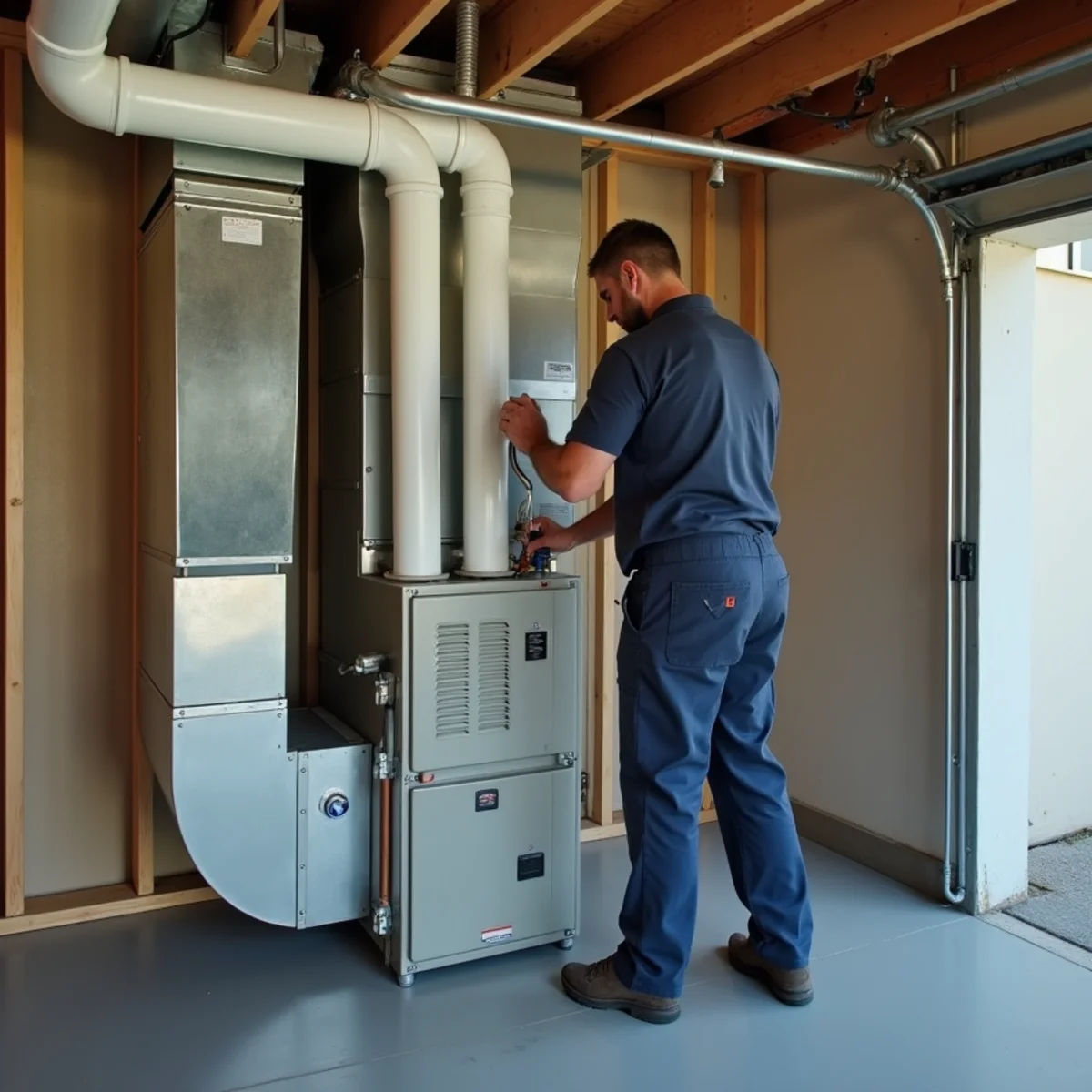
Gas furnace efficiency is rated in AFUE, the share of the fuel's heat that stays in the house. Many older Lynnwood furnaces are 80% AFUE and vent through a metal flue into a chimney or B-vent. A condensing furnace at 90% AFUE or higher pulls so much heat from the exhaust that the vapor condenses, so it vents through PVC pipe out a side wall or the roof, usually with a second pipe bringing in outdoor combustion air.
That venting change needs planning: a code-compliant pipe route with clearances from windows, doors and the gas meter, plus a fix for any gas water heater left 'orphaned' in an oversized chimney once the furnace no longer shares it. The acidic condensate needs a drain or condensate pump, protected from freezing in garages and crawl spaces. Size matters as much as efficiency, too: an oversized furnace short cycles and wears out sooner.
Adding central air conditioning to a Lynnwood home built without it
The June 2021 heat dome, when local stations reported 109 degrees in Lynnwood, pushed many households to add cooling. With an existing ducted furnace, central air installation means an evaporator coil on the furnace, a refrigerant line set to an outdoor unit, a condensate drain and a dedicated 240-volt circuit. The installer should confirm that the blower and ducts, often sized decades ago for heat alone, can carry cooling airflow. Many owners now choose a heat pump over an AC-only condenser because it heats as well.
Condos and apartments along Highway 99 and around City Center that rely on baseboard or wall heat have no ducts to use. There, a ductless mini-split system is the practical route, with the landlord's approval if you rent, as close to half of Lynnwood households do.
Heat pump installation and dual-fuel conversions
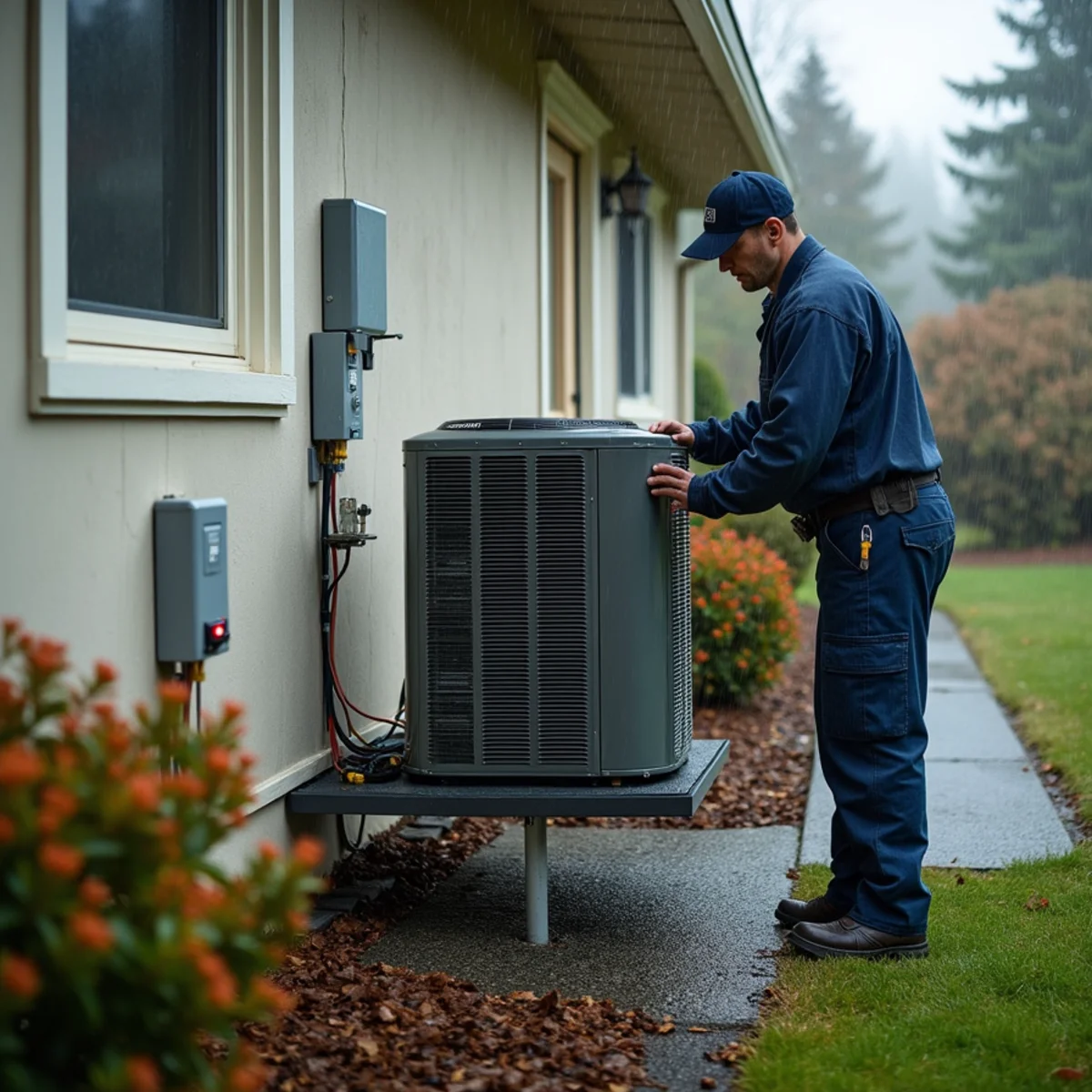
A heat pump moves heat rather than making it, heating in winter and cooling in summer. Compare SEER2 for cooling efficiency and HSPF2 for heating. Lynnwood's marine climate suits heat pumps: most heating hours fall in the 30s and 40s, and cold-climate models hold their output into the teens for the few nights when arctic air settles over Puget Sound.
An all-electric setup pairs the heat pump with an air handler and backup heat strips, common where an electric furnace or baseboards used to be. A dual-fuel system keeps a gas furnace as backup below a switchover temperature, a good fit for a home on Puget Sound Energy gas whose furnace still has life. New equipment is moving from R-410A to R-454B and R-32. Weigh the options in our comparison of a heat pump versus a gas furnace in the Puget Sound area, and plan on heat pump repair and service to keep defrost controls and drains in order.
Single-stage, two-stage or variable-speed: choosing the equipment tier
Once the size is right, the next choice is how the equipment runs. It changes comfort, noise and operating cost more than the brand on the cabinet does, and it is the line that varies most between two quotes for the same house.
| Tier | How it runs | Where it fits |
|---|---|---|
| Single-stage | Full output or off | Tight budgets, smaller ramblers, rentals; simplest to repair |
| Two-stage | A low stage for mild days, full output for cold snaps or heat waves | Most Lynnwood split-levels and two-story homes; longer, quieter cycles and better humidity control |
| Variable-speed (inverter) | Ramps output up and down in small steps | Heat pumps where efficiency and comfort matter most; uneven upstairs rooms; homes leaving gas behind |
| Cold-climate heat pump | Inverter compressor rated to hold capacity at low outdoor temperatures | All-electric conversions and homes that want the furnace gone entirely |
Efficiency ratings in one paragraph
Gas furnaces are rated by AFUE (a 96% AFUE furnace turns 96% of the gas into heat); air conditioners by SEER2; heat pumps by SEER2 for cooling and HSPF2 for heating. Higher numbers cost more up front and less each month. Utility rebates usually key off these ratings, so check heat pump rebates in Snohomish County before you pick a tier.
Before the install: load calculation, ductwork and electrical panel checks
A careful quote starts with measurements, not the old unit's size. ACCA Manual J calculates heat loss and gain room by room, Manual S picks equipment to match, and Manual D checks that the ducts can deliver the airflow. Many 1960s to 1980s Lynnwood homes have new windows or added insulation, so today's right size is often smaller than the old nameplate. The walk-through should also cover:
- Ducts in the crawl space or attic: disconnected runs, crushed flex duct and leaky joints
- Return air, especially when cooling is being added
- The electrical panel, since a heat pump or condenser needs a dedicated 240-volt circuit and many original 100-amp panels are nearly full
- Outdoor unit placement, noise, defrost drainage and any HOA rules
A full panel means a panel upgrade or equipment with a smaller circuit, which is better found during the estimate than on install day.
Permits and inspections in Lynnwood and unincorporated Snohomish County
Replacing a furnace or installing AC or a heat pump typically requires a mechanical permit, plus an electrical permit for new wiring. The issuing office depends on where the property sits, not the mailing address: the City of Lynnwood permit center inside city limits, and Snohomish County Planning and Development Services (PDS) for unincorporated addresses such as much of Martha Lake and North Lynnwood.
The installing contractor usually pulls the permit and schedules the inspection, but confirm who does before work starts. Installs are reviewed under the 2021 Washington State Energy Code and mechanical code, in effect since March 15, 2024. In condos and the newer townhomes near the Lynnwood City Center light rail station, get HOA approval for the outdoor unit location first.
Snohomish PUD, Puget Sound Energy and state incentives: what to check before you sign
Incentives change often, so treat any rebate as something to confirm, not a discount to count on. Before you sign, ask:
- Does this exact model and efficiency rating qualify under the program's current rules?
- Does the program require a participating contractor, and is your installer one?
- Is pre-approval needed before installation, and who files the paperwork?
Snohomish PUD's heating rebate page lists current heat pump offers, generally for homes heated with electricity and usually requiring a PUD-participating contractor. The contractor we refer may or may not be one, so ask. Gas customers should check Puget Sound Energy's rebates page. State income-qualified programs and federal tax credits have also changed recently, so verify the current rules; our heat pump rebate guide for Snohomish County covers the details.
Rules follow the address across the communities we serve around Lynnwood, from older Edmonds homes without cooling to compact Mountlake Terrace houses and Bothell homes on both sides of the county line.
What's included in an HVAC installation in Lynnwood
A replacement quote should spell out the whole job. For a furnace, central AC or heat pump installation, expect the contractor to include:
- Removal and disposal of the old equipment, including recovering refrigerant from an old AC or heat pump
- A new or cleaned and pressure-tested line set, sized for the new equipment and refrigerant
- Plenum and duct transitions sealed to the new cabinet, plus any duct changes the Manual D check calls for
- Electrical work: disconnect, circuit and breaker sized to the equipment, done by a properly certified electrician
- Gas piping, venting and condensate drains or pumps as the equipment requires
- The mechanical permit, the inspection, and a thermostat set up for the system type
- Commissioning: refrigerant charge verified, airflow and temperature rise or drop measured, safeties tested
- Model and serial numbers, warranty registration instructions and a walk-through of how to run the system
Ask how the manufacturer warranty is registered and who handles it. Many manufacturers require registration within a set window after installation for the longest parts coverage, and the contractor's own labor warranty is a separate promise with its own terms.
What affects the cost of a new system
We do not publish installation prices, because two houses on the same street can need very different jobs. What moves a quote:
- System type: furnace, furnace plus central air, heat pump, or dual fuel
- Capacity and efficiency (AFUE, SEER2, HSPF2), and single-stage versus variable-speed equipment
- Venting, condensate drainage and water heater vent fixes
- Duct repairs, added returns, and electrical or panel work
- Access, permits, HOA requirements and any rebates you qualify for
The HVAC Installation process, step by step
A replacement takes more planning than a repair. Here is how an installation typically runs.
- 1
Walk-through and load calculation
The installer measures the house for a Manual J load calculation and inspects ducts, venting, the gas line and the electrical panel.
- 2
Written options and price
You get a written quote showing equipment, efficiency ratings, scope and exclusions. The price is set before any work starts.
- 3
Permit and install day
The permit is pulled (confirm who handles it), rebate steps are checked, and the new system is set, vented, wired and charged.
- 4
Startup and inspection
The installer checks gas pressure, airflow and refrigerant charge, shows you the thermostat and filter, and the inspection closes the job.
Why choose Alderwood Heat & Cool Pros for HVAC Installation
You live with an installation for 15 years or more. Here is what you get:
Sized to the house
Quotes built on a load calculation and a duct check, not the capacity printed on the old furnace.
Honest about the options
Furnace, central air, heat pump or dual fuel, including when a repair still makes more sense.
Price before work starts
A written price and scope before equipment is ordered, with permits and exclusions spelled out.
Registered and insured contractors
Every HVAC contractor we send is registered with Washington L&I, licensed where Washington requires it, and insured.
HVAC Installation & Replacement around Lynnwood
We cover all of Lynnwood, including Alderwood Manor, Martha Lake, North Lynnwood, Meadowdale and City Center, plus Brier and the five cities within about 25 minutes. Edmonds and Mountlake Terrace are next door; Bothell, Mill Creek and Mukilteo are the outer ring. See the full list of HVAC service areas around Lynnwood, or go straight to your city:
Frequently asked questions
Should I replace my gas furnace with a heat pump?
It depends on the furnace's age, your electrical panel and your priorities. If the furnace is old and you want cooling anyway, a heat pump handles both and runs efficiently through most Lynnwood winters. If the furnace still has years left, a dual-fuel setup adds a heat pump and keeps gas as cold-snap backup. Homes heated with electric resistance usually save the most, and those are the homes Snohomish PUD rebates generally target.
Can air conditioning be added to my existing furnace and ducts?
Usually, yes. Most ducted gas furnaces in Lynnwood can take an evaporator coil paired with an outdoor air conditioner or heat pump. The installer should confirm that the blower can move enough air for cooling, that the ducts and returns are large enough, that the coil can drain, and that the panel has room for a 240-volt circuit. If the furnace is near replacement age, replacing both together keeps the blower and coil matched.
Do I need a permit to replace a furnace or add a heat pump in Lynnwood?
Usually, yes. A mechanical permit is typically required, and new wiring may need an electrical permit. Inside city limits, permits come from the City of Lynnwood permit center; unincorporated areas with Lynnwood mailing addresses, such as Martha Lake and North Lynnwood, go through Snohomish County Planning and Development Services. The installing contractor usually pulls the permit, but confirm in writing who is responsible before work starts.
How long does an installation take?
A like-for-like furnace or air conditioner replacement that reuses the existing ducts and venting often takes one to two days. A first-time central air install, a heat pump or dual-fuel conversion, or new venting typically runs two to three days, and duct or panel work can add more. Equipment availability, permits and inspection scheduling also affect the calendar, so ask for a realistic timeline with your quote.
What size furnace or heat pump does my house need?
Not one you can pick from square footage or the old unit's label. Many 1970s Lynnwood houses got oversized furnaces, and later insulation and window upgrades cut the load further. A Manual J load calculation measures the actual house, and equipment sized from it runs longer, quieter cycles, handles summer humidity better and tends to last longer. If a quote does not mention a load calculation, ask how the size was chosen.
Still have a question, or need help right now?