HVAC Guide · 7 min read
AC Not Cooling During a Puget Sound Heat Wave: What to Check First
By Alderwood Heat & Cool Pros · Published October 3, 2026
The short answer
During a Puget Sound heat wave, an AC holding the house 15 to 20 degrees below outdoor temperature is usually working, because local systems were sized for days in the 80s. If it loses more ground, check the thermostat, filter, breakers and outdoor fan. Ice on the copper lines means fan only, then call.
Why your AC can't hold 70°F when it's 100°F outside
Air conditioners are sized for a design temperature, an outdoor reading exceeded only a few hours a year. Around Lynnwood that design day is somewhere in the 80s, so a correctly sized system keeps up on a warm July afternoon, not in a record heat dome. On June 28, 2021, local stations reported 109°F in Lynnwood; no system sized for a typical Puget Sound summer could hold 70°F inside that day.
A 15 to 20 degree gap between outdoors and indoors is a reasonable expectation at the afternoon peak, so at 100°F outside, an upstairs room in the low 80s with the system running nonstop can be normal. What is not normal: warm air from the vents, a house that keeps getting hotter after sunset, or a system that won't run at all.
Check the thermostat and the filter first
Confirm the thermostat is set to COOL, the setpoint is below room temperature and the fan is on AUTO. Replace its batteries if it uses them, and look for a schedule or energy-saving program that is quietly raising the setpoint during peak hours.
Then pull the filter. A loaded filter starves the indoor coil of air, which cuts cooling and can lead to a frozen coil. Filters fill faster after a late-summer smoke event, so if there was haze last week, check it now. Our guide to wildfire smoke and HVAC filters covers what to replace it with.
Breakers, the outdoor disconnect and the condenser
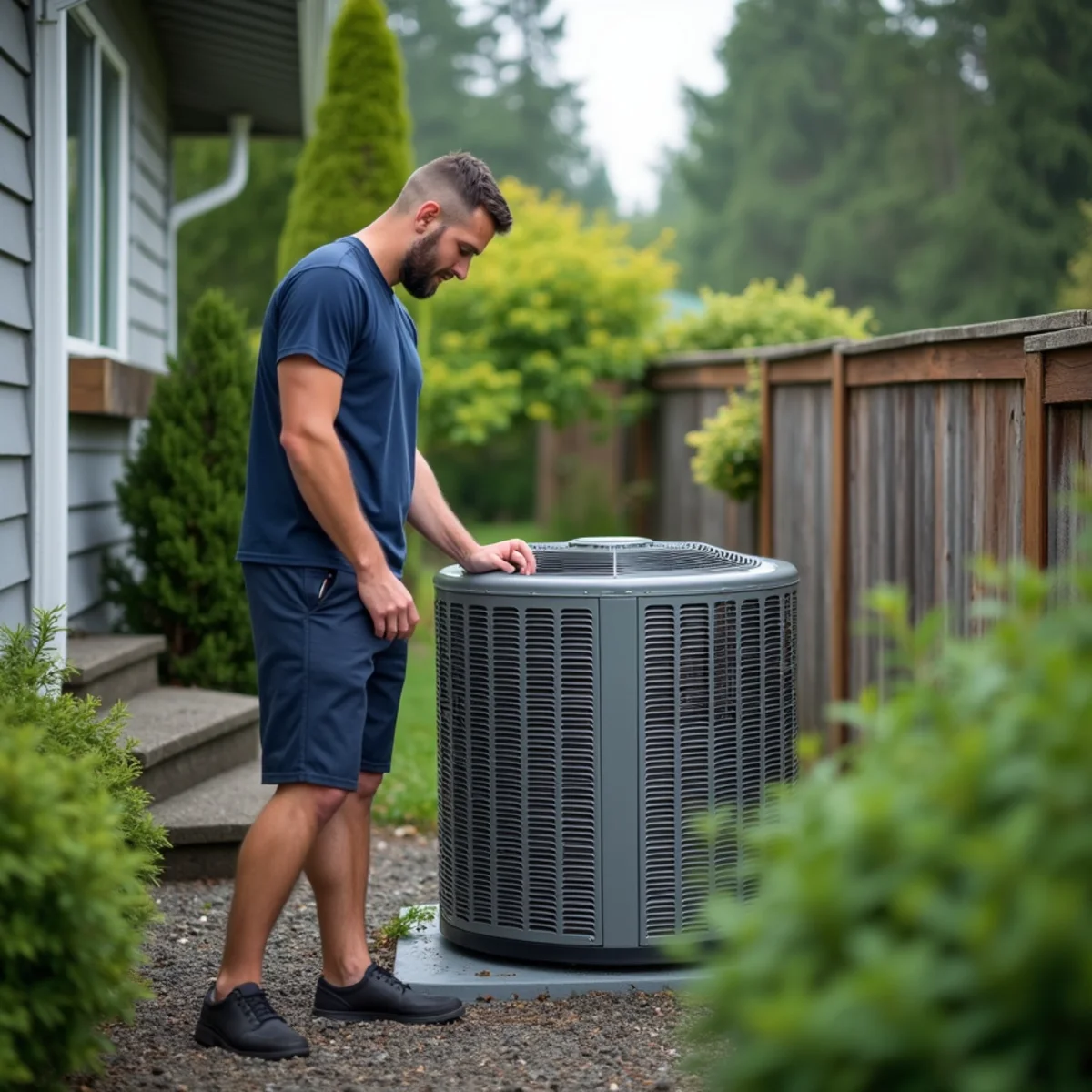
Most central systems have two breakers, one for the indoor furnace or air handler and one for the outdoor unit, plus a disconnect box mounted on the wall near the condenser. Make sure both breakers are fully on. If one trips again right after you reset it, leave it off and call; that is a fault, not bad luck.
Next, go outside while the system is calling for cooling. The top fan should spin and the compressor should be running. A loud hum with a fan that won't turn often means a failed capacitor or fan motor. Don't nudge the blade with a stick, because capacitors store a dangerous charge; shut the system off and call. While you are there, clear cottonwood fluff and grass clippings from around the coil.
Ice on the lines or the indoor coil: turn it off
Frost or ice on the larger insulated copper line at the outdoor unit, or ice you can see at the indoor coil, means the coil is freezing. That usually comes from low airflow (a dirty filter, closed registers, a weak blower) or low refrigerant from a leak. Running it frozen can send liquid refrigerant back to the compressor and damage it.
Set the thermostat to OFF and the fan to ON. The blower will melt the ice, which can take several hours, so keep an eye on the drain pan and the floor around the furnace. Once it has thawed and you have fixed any obvious airflow problem, you can try cooling again. If it freezes a second time, it needs a technician. Refrigerant isn't used up, so low charge means a leak, and only an EPA 608-certified tech should handle it.
Condensate overflow and float switches
An air conditioner pulls a surprising amount of water out of the air, and in a long heat wave that drain runs constantly. Many systems have a float switch in the drain pan or the condensate line that shuts the AC off when water backs up. If the outdoor unit has stopped, the indoor fan still runs and the pan under the coil is full, that switch is the likely reason.
Check that the drain line is flowing where it exits, and if a condensate pump in the garage or basement has a full reservoir, it may have failed. A wet-dry vacuum on the outdoor end of the line often clears a clog.
Help the system keep up
When the equipment is healthy but outmatched by the weather, a few changes make a real difference:
- Open every supply register and keep return grilles clear. Closing vents in unused rooms raises duct pressure and cuts airflow across the coil.
- Close blinds and curtains on south- and west-facing windows by late morning. Afternoon sun through glass is one of the biggest loads on a Puget Sound house.
- Pre-cool in the morning while the system has headroom, and skip the oven and dryer until evening.
- Don't set the thermostat to 65°F. It won't cool faster, and a very low setpoint keeps the coil colder for longer, which makes freezing more likely.
- Use ceiling and box fans to move air across people, especially in upstairs bedrooms.
Expert insight: what heat-wave AC calls in Lynnwood usually turn up
The four we see again and again, in rough order:
- A packed condenser coil. Cottonwood fluff, grass clippings and a winter's worth of fir needles mat the outdoor coil, so it can't shed heat and pressures climb. A gentle rinse from the inside out, with the power off at the disconnect, is part of every heat-wave visit.
- A failed run capacitor. Capacitors weaken with age and fail in heat. The outdoor fan or compressor hums and won't start, or the fan stops while the compressor keeps running. It is a common, quick repair, and a good reason not to keep restarting a unit that hums.
- Too little return air upstairs. Many 1970s split-levels and two-story homes have one central return, so the bedrooms bake while the thermostat downstairs reads fine. The system isn't broken; the house needs airflow changes, and fans help in the meantime.
- A frozen coil from a low setpoint and a dirty filter. The combination of 65°F on the thermostat and a filter that last changed in the fall is the classic heat-wave freeze-up.
None of this replaces a professional AC repair visit, but it explains why a spring tune-up is the cheapest heat-wave insurance there is.
Protect people first
Older adults, infants, people with heart or lung conditions and anyone on certain medications are most at risk when a house gets hot. Signs of heat exhaustion include heavy sweating, dizziness, nausea, headache and muscle cramps: move the person somewhere cooler, give water and cool them with damp cloths. Confusion, fainting, a very high body temperature or hot skin that has stopped sweating can mean heat stroke. Call 911 right away.
If your home can't be kept safe, go somewhere cooler; city and county announcements list cooling centers.
When to call for AC repair
Call if the outdoor unit hums but the fan won't spin, a breaker keeps tripping, the coil freezes twice, the vents blow warm air, or the house keeps warming after the sun goes down. Our AC repair service in Lynnwood covers central air and heat pumps in cooling mode, and if someone at home is vulnerable to the heat, our 24/7 emergency HVAC repair line takes that call at any hour, including in Mill Creek, WA and the rest of south Snohomish County.
Call (321) 478-0693. We answer 24/7, dispatch the nearest available contractor, and you get a price before work starts. Heat waves bring heavy call volume, so arrival depends on weather, traffic and demand; we give you a realistic window when you call.
Frequently asked questions
Is it normal for my AC to run nonstop during a heat wave?
Yes, on the hottest days it often is. Systems in the Lynnwood area are typically sized for design days in the 80s, so when the temperature passes 95°F or 100°F, a healthy unit may run continuously and still let the house drift into the high 70s or low 80s by late afternoon. That is a capacity limit. It becomes a problem when the air from the vents is barely cool, the indoor coil ices up, or the house fails to recover once the evening cools off.
Can I keep running my AC if the outdoor unit hums but the fan isn't spinning?
No. Turn the system off at the thermostat. A humming condenser with a stopped fan usually means a failed capacitor or fan motor, and the compressor can overheat quickly without airflow across the outdoor coil. Don't try to spin the fan blade by hand or with a stick, because capacitors hold a charge and the fan can start without warning. A technician can test the capacitor and motor and usually replace the failed part on the same visit if it is on the truck.
Should I just add refrigerant if my AC is not cooling?
Refrigerant isn't consumed like fuel, so a system that is low has a leak. Adding refrigerant without finding the leak only buys time, and it has to be done by an EPA 608-certified technician. Many Lynnwood-area systems still use R-410A, while newer equipment is moving to R-454B and R-32. The technician should confirm the charge with pressure and temperature readings, look for the leak, and give you a price for repair or replacement before any work starts.
Still have a question, or need help right now?