HVAC Guide · 6 min read
Heat Pump Blowing Cold Air or Iced Over in Winter: What Is Normal and What Is Not
By Alderwood Heat & Cool Pros · Published October 3, 2026
The short answer
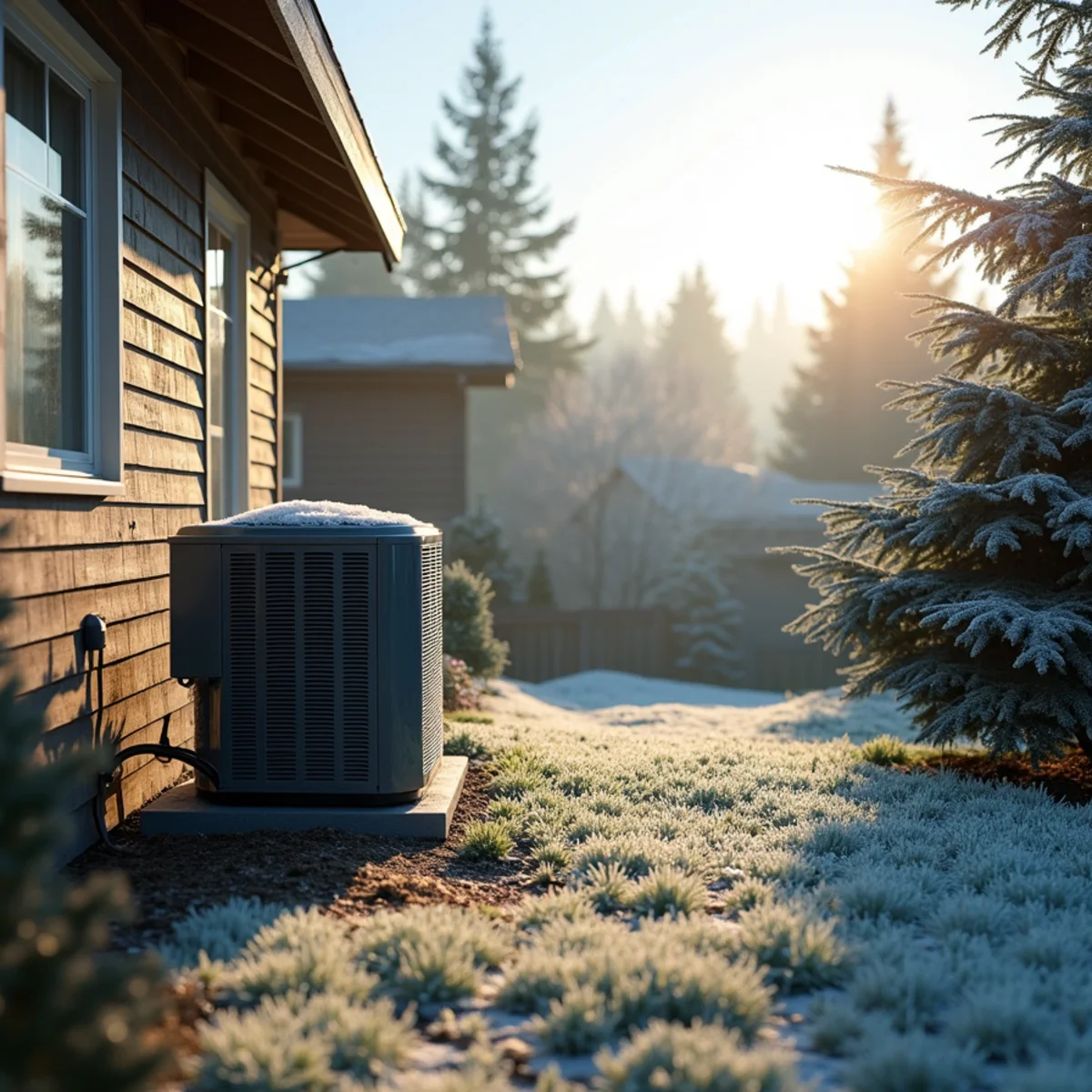
A heat pump blowing cool air in winter is usually in defrost: the fan stops, steam rises and the vents run lukewarm for a few minutes, which is normal. A light, even frost is normal too. Solid ice that won't clear, ice on the top or fan, or a house that keeps cooling off means call for repair.
Why heat pump air can feel cool when it is working
A gas furnace pushes out air that is noticeably hot. A heat pump delivers a larger volume of gentler warmth, commonly somewhere around 90 to 100°F at the register in heating mode. Your skin sits in the low 90s, so air at that temperature moving across a wet or bare hand can feel cool even while it warms the room.
A simple test settles it: hold a kitchen thermometer in the supply register nearest the indoor unit for a few minutes during a normal run, not a defrost. Air well above room temperature means the system is heating. Air at or below room temperature, for long stretches outside of defrost, points to a problem worth a call. Output also drops as outdoor temperatures fall.
The defrost cycle: what you see, hear and feel
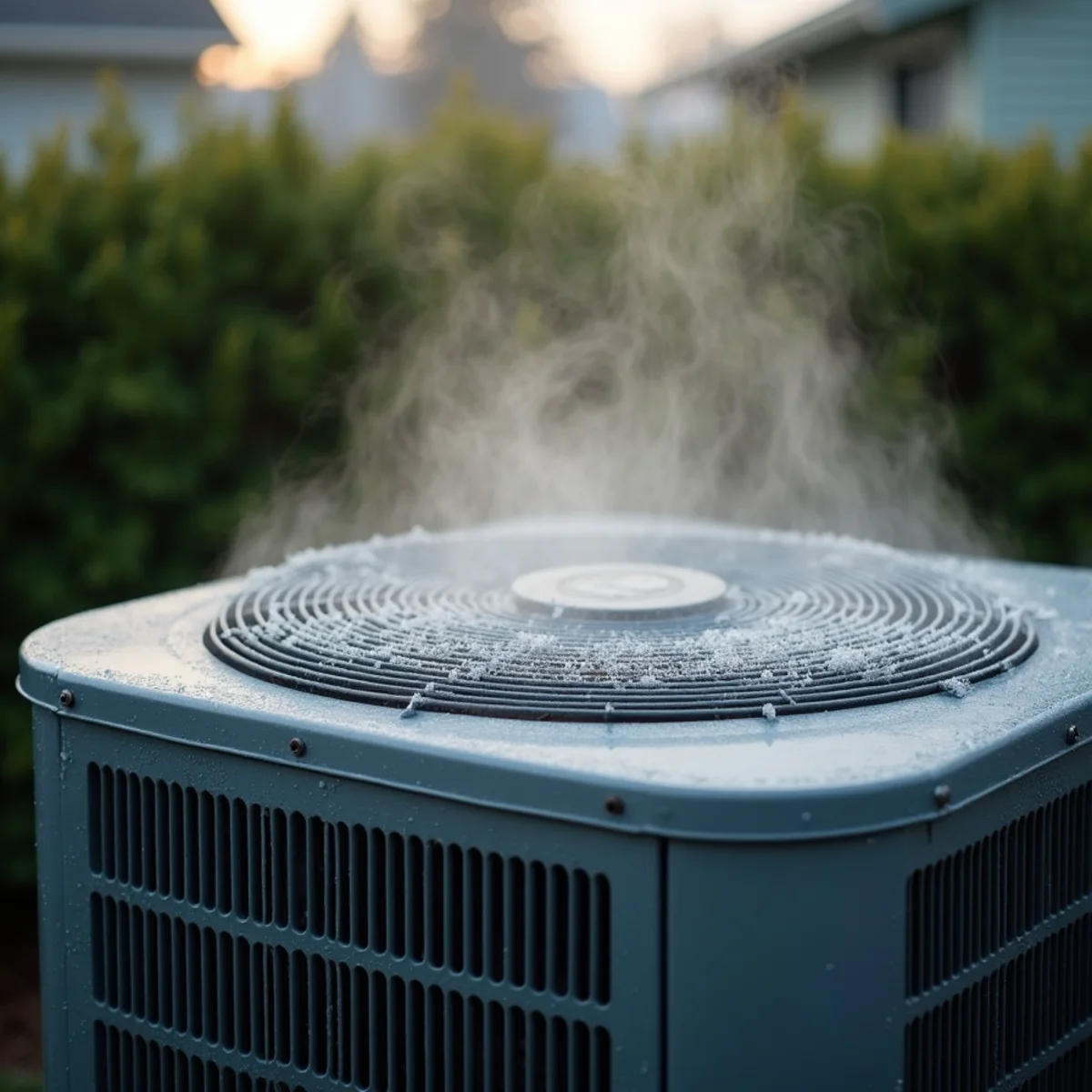
Puget Sound winters are damp and hover just above freezing, which is exactly the weather that frosts an outdoor coil. In heating mode the coil runs colder than the outside air, so moisture freezes onto its fins. Left alone, that frost would block airflow, so a defrost control board watches coil temperature and run time and periodically clears it.
What happens during defrost
The reversing valve shifts the system briefly into cooling mode, sending hot refrigerant to the outdoor coil. The outdoor fan stops so the heat stays on the coil, and the melting frost rises as steam. Indoors, many systems turn on backup electric heat strips to temper the air, but you may still feel lukewarm air for a few minutes. When defrost ends, the valve shifts back with an audible whoosh and the fan restarts.
How long and how often
A defrost usually lasts a few minutes and rarely more than about ten to fifteen. In frosting weather it can repeat every 30 to 90 minutes of run time, depending on the model and the humidity. Water dripping or pooling under the unit afterward is meltwater, not a leak.
Frost vs ice: how to tell normal from a fault
Normal winter behavior looks like this:
- A thin, even layer of white frost across the coil that melts during defrost.
- Steam rising from the unit for a few minutes, with the outdoor fan stopped.
- Meltwater dripping from the base, and a little ice at the base in deep cold that clears later.
These are not normal: a coil encased in solid or glassy ice that is still there hours later; ice on the top panel, the fan grille or the fan blades; frost on only part of the coil, which can point to a low refrigerant charge; and a compressor running while the outdoor fan never spins, or a loud hum with no start.
Behind those faults are a short list of parts: a failed defrost board or coil sensor, a reversing valve stuck in position, a bad outdoor fan motor or its capacitor, or refrigerant lost through a leak. All of them need a technician with gauges and a meter, which is what a heat pump repair visit covers.
Outside causes: gutters, drainage and snow
Some icing has nothing to do with the heat pump itself. An overflowing gutter or a missing downspout drips onto the top of the unit, and that water freezes into a cap no defrost cycle can clear. A unit sitting low on a sunken pad lets meltwater refreeze around the base coil. In Mukilteo, where many homes sit on hillsides above Possession Sound, wind-driven rain and runoff from the slope make both problems more common.
Keep 12 to 18 inches clear around the unit, brush off snow, and ask about a riser stand if the pad sits low. If the coil is iced from dripping water, turn the system off at the thermostat and melt the ice with a gentle stream from a garden hose. Never chip at it: the aluminum fins and copper tubing bend and puncture easily.
Thermostat settings and auxiliary heat
When a heat pump thermostat shows AUX, the backup electric strips are helping, which is normal during defrost and on the coldest mornings. Long or frequent aux run time drives up Snohomish PUD bills, and the most common cause is a deep night setback: raising the setpoint several degrees at once can bring the strips on to close the gap. Small setbacks of two or three degrees, or a thermostat with heat pump recovery logic, keep the compressor doing the work.
Also confirm the mode is HEAT, not COOL or an AUTO mode flipping between the two. A fan set to ON instead of AUTO keeps air moving between cycles, which can feel drafty and cool.
When to switch to emergency heat
Emergency heat (EM HEAT) shuts off the outdoor unit and runs the house on backup heat alone. Use it when the outdoor unit is iced solid, the fan will not spin, the unit is making grinding or banging noises, or it has been damaged by a falling branch. It protects the compressor and keeps the house warm until a technician arrives. On a dual-fuel system, the gas furnace carries the load instead.
Do not use emergency heat for a normal defrost or just because the air felt cool. Electric strips cost far more to run than the heat pump, so treat EM HEAT as a short-term bridge, not a winter setting.
Expert insight: why damp 35-degree mornings are the hardest on a heat pump
New owners expect a heat pump to struggle on the coldest night of the year. In Lynnwood the busier defrost days are usually the damp ones just above freezing, when fog or drizzle hangs over the yard. Cold, dry air carries little moisture, so frost builds slowly. Air at 33 to 40 degrees and near 100% humidity is loaded with water, and it freezes onto the outdoor coil fast. So a heat pump may defrost more often on a gray January morning than during a clear, frosty cold snap.
That is why defrost timing matters so much here. A healthy system clears the coil in a few minutes and goes back to heating. One with a failing coil sensor, a sticking reversing valve or a low refrigerant charge defrosts too often, or not enough, and the ice slowly wins. Use the table below to sort what you are seeing:
| What you see | Normal? | What to do |
|---|---|---|
| Thin, even white frost across the coil | Normal | Nothing; defrost will clear it |
| Steam rising and the fan stopped for a few minutes | Normal | Nothing; this is the defrost cycle |
| Vents blowing lukewarm air for a few minutes | Normal during defrost | Check again in 10 minutes |
| Solid ice still on the coil after a few hours | Not normal | Switch to emergency heat and call |
| Ice on the top panel or around the fan | Not normal | Look for a gutter drip above the unit; call if it builds |
| Aux or Em Heat on all day in mild weather | Not normal | Call; the strips may be carrying the house |
When to call for heat pump repair
If your heat pump has been iced over for hours, the outdoor fan has stopped, or the house keeps losing ground even with aux heat running, call Alderwood Heat & Cool Pros. We answer 24/7 and dispatch the nearest available contractor in Lynnwood, Mukilteo and nearby cities. Every HVAC contractor we send is registered with Washington L&I, licensed where Washington requires it, and insured, and you get the price before work starts. For a cold house at night, our 24/7 emergency HVAC repair line is the fastest route. Call (321) 478-0693.
Frequently asked questions
How long should a heat pump defrost cycle last?
Most defrost cycles finish within a few minutes, and a cycle that runs much past ten to fifteen minutes is worth noting. The control board ends defrost when the coil sensor reaches its target temperature or a time limit runs out. If the unit seems stuck with the fan off and steam long gone, or it goes into defrost constantly while the coil stays iced, the defrost board, the coil sensor or the reversing valve may be failing and should be checked.
Why does my heat pump run constantly when it is cold outside?
Long run times are normal for a heat pump in cold weather. It delivers gentler heat than a furnace, and variable-speed models are designed to run at low output for hours rather than cycling on and off. The warning signs are different: indoor temperature falling below the setpoint, aux heat showing nearly all day, or ice building on the coil. Any of those, along with a jump in your electric bill, is a reason to book a heat pump repair visit.
Can I pour hot water on an iced-over heat pump?
Avoid boiling or very hot water. Turn the system off at the thermostat, then melt the ice with a gentle stream of tap-temperature water from a garden hose, working from the top down. Never chip or scrape, because the fins and refrigerant tubing damage easily. If the ice came from a dripping gutter, fix the gutter. If it returns without any outside water source, the defrost system has likely failed, so switch to emergency heat and call a technician.
Still have a question, or need help right now?